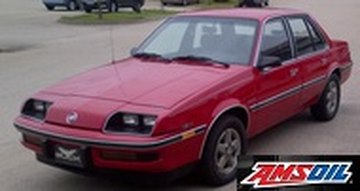
Ensuring Correct Lubricant Selection for the 1983 Buick SKYHAWK 1.8L
When sourcing maintenance products for a vehicle like the 1983 Buick SKYHAWK with a 1.8L engine, many owners make the mistake of assuming that proximity in time or similarity in engine displacement guarantees compatibility. Relying on a nearby model year or a similar engine from a different vehicle line can lead to incorrect product selection. Even if two engines share the same displacement, differences in internal clearances, component metallurgy, and original engineering requirements mean that what works for one may not be appropriate for this specific application.
Why Year, Make, and Model Are Only Part of the Equation
While knowing the year, make, and model is a necessary starting point, it is often insufficient for precise product matching. Automotive manufacturers frequently update engine specifications, internal tolerances, and lubrication requirements within a single production cycle or across different vehicle platforms that use similar-sounding engines. For an engine like the 1.8L found in this Buick, several factors necessitate looking beyond basic vehicle identity:
- Internal Clearances: The specific tolerances between moving parts dictate how much flow resistance is acceptable in a lubricant.
- Material Compatibility: Different engine components may react differently to various additive packages found in modern oils.
- Application-Specific Requirements: A vehicle's specific configuration can influence the necessary properties of the fluids used throughout its systems.
Because these variables are so precise, attempting to "guess" based on a similar engine from another manufacturer or even a different year of the same model can result in selecting a product that does not meet the exact needs of this 1.8L power plant.
Navigating Oil Formulations and Filter Fitment
When deciding between conventional, synthetic-blend, or full synthetic engine oils, it is important to remember that the formulation choice does not override the fundamental requirement for application matching. While different oil types offer varying levels of stability and resistance to thermal breakdown, they must still align with the specific viscosity requirements of the engine. A high-quality synthetic oil will not compensate for a viscosity grade that is incorrect for the engine's design.
The same principle applies to selecting an oil filter. While many filters may look identical in size or shape, their internal specifications—such as bypass valve settings, filtration media density, and sealing dimensions—are engineered for specific engines. Using a filter that is "close enough" based on thread size alone can lead to improper oil flow or inadequate filtration. Always prioritize products that are explicitly identified as compatible with this exact engine configuration rather than assuming interchangeability from other models.
Using Application-Specific Data for Accurate Results
The most effective way to ensure you are choosing the correct products is to utilize the detailed, application-specific information provided on this page. Rather than relying on general automotive knowledge or guesswork, you should match your selection directly to the engine-oil viscosity and product listings shown above. These listings have been curated to align with the specific requirements of the 1983 Buick SKYHAWK 1.8L.
By reviewing the matched oil products and maintenance components displayed here, you can move forward with confidence that the items are intended for this exact application. This approach eliminates the risks associated with using parts or lubricants meant for similar but technically different vehicles, providing a much more reliable foundation for your maintenance tasks.